

Northern Lights 2026: Best Time, Best Places & How to See the Aurora at Solar Maximum
Table of Contents
This is your last chance until the mid-2030s.
If you’ve been putting off seeing the Northern Lights, 2026 is the year to stop waiting. We’re at solar maximum—the peak of the sun’s 11-year activity cycle—and scientists say the years immediately following solar maximum often produce some of the strongest and most widespread aurora displays.
After 2026, solar activity will decline, and aurora displays will become weaker and less frequent until the next solar maximum in the mid-2030s.
This isn’t travel marketing hype. This is solar physics. And if you want to see the Northern Lights at their absolute best, this guide will tell you exactly how to do it.
Why 2026 is THE Year (The Science)
Solar Cycle 25 and the Double Peak
Solar Cycle 25 is predicted to have a rare “double peak”—two bursts of intense solar activity instead of one, happening when the Sun’s northern and southern hemispheres peak at different times.
The reason 2026 matters starts with the sun’s approximately 11-year cycle, swinging between quieter periods and highly active ones marked by sunspots, solar flares, and coronal mass ejections.
What this means for you:
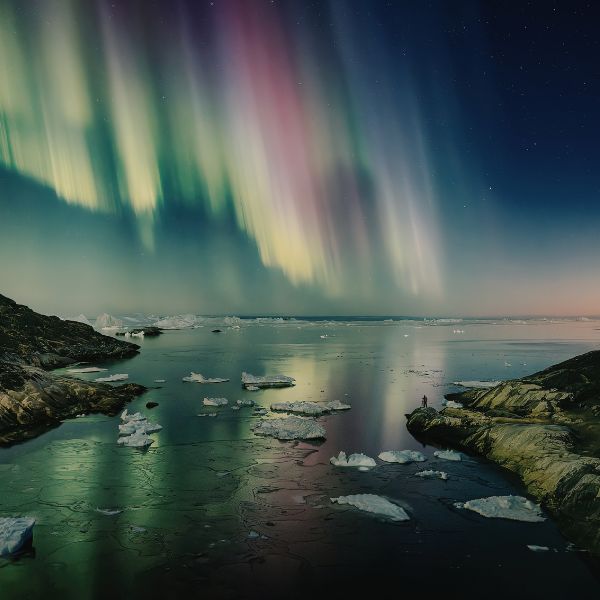
During years like 2026, auroras tend to appear more frequently across the auroral zone, show stronger movement and color rather than faint glows, and occasionally reach farther south during major geomagnetic storms, Northern Lights.
Shorter trips can pay off more often, and first-time aurora hunters may have better luck than in quieter solar years.
The Post-Peak Advantage
Here’s what most people don’t know: Scientists have found that the years just after a solar maximum can produce some of the most intense and unpredictable space weather, as during this declining phase, the Sun is still highly active, sending powerful bursts of energy toward Earth.
Expert predicted that 2026 is another good year for aurora hunting, with solar activity expected to remain elevated throughout the year.
Bottom line: Comparable levels of widespread activity may not return until the mid-2030s, once the next solar cycle builds toward its own peak Northern Lights.
When to See the Northern Lights in 2026
The Season: September to March
The best time to see the aurora borealis is from late September to March, with December through to February bringing the most favourable conditions.
Why winter dominates:
In winter, the Earth is tilted in such a way that the polar regions receive extended hours of darkness and the weather is often clear, with the cold air offering less cloud cover and better visibility.
November is the month when the conditions are the best to see the aurora, as the weather is moderate, and the skies are clear.
Peak Months: February, March, September, October
Around the equinoxes in March and September, geomagnetic activity ramps up, making the Northern Lights easier to spot, as Earth’s orientation allows solar wind to interact more directly with the magnetosphere, enhancing geomagnetic storms that fuel the auroras.
2026 Equinox Dates:
- March 20, 2026 (vernal/spring equinox)
- September 23, 2026 (autumnal equinox)
Pro tip: The equinoxes (March and September) historically produce more geomagnetic storms due to the orientation of Earth’s magnetic field relative to the Sun Northern Lights.
February 2026: Right Now is Perfect
If you’re reading this in February 2026, you’re in luck:
Murmansk, Norway, Finland, Sweden, and Iceland report 70-80% success rates for clear nights in February, outperforming December’s crowds and January’s harsher cold.
February 2026 aurora frequency is 20% above average, with vivid greens, purples, and reds expected.
Mid-month is expecting Kp 4-6 storms, potentially visible as far south as northern U.S. states or UK under ideal conditions.
Best Time of Night Northern Lights
The northern lights are most active between 10 PM and 2 AM local time.
Why midnight hours: Most auroral activity occurs around local midnight when your location is on the “night side” of Earth facing away from the sun, optimally positioned to intercept solar wind particles.
Plan for patience: Many experienced aurora chasers plan trips that allow several nights in one location, increasing the odds that at least one evening delivers clear skies and activity.
Moon Phases Matter
A bright full moon can wash out the aurora’s colours and reduce visibility, so plan your aurora-viewing holiday around a new moon or a crescent moon phase.
2026 New Moon Dates (Best for viewing):
- February 1
- March 3
- April 1
- September 7
- October 6
- November 5
- December 4
Where to See the Northern Lights: The Best Locations
The Auroral Oval Explained
The Northern Lights aren’t random. They follow a ring-shaped zone around Earth’s magnetic north pole called the “auroral oval.”
The “quiet” state of the aurora is on average a thin oval band situated around 67-68 degrees in geomagnetic latitude.
Critical distinction: Geomagnetic latitude is different from geographic latitude. The magnetic north pole is currently located in northeast Canada, about 400km from the geographic pole. This means some locations are better positioned than others.
Norway: The Aurora Powerhouse
Tromsø (69.65°N)
- Located at the 85°N oval edge, making it a prime Northern Lights spot
- Known as the “City of the Northern Lights”
- Alta is known as the City of the Northern Lights and has a long history of aurora research
- Infrastructure: Hotels, tours, easily accessible
- Best months: October-March
- Success rate: 70-80% on clear nights
Why Norway works: Long dark nights, reliable clear weather in certain areas, and positioned directly under the auroral oval even during quiet solar activity.
Pro locations:
- Lyngen Alps (dramatic mountain backdrops)
- Lofoten Islands (coastal scenery)
- Svalbard (extreme north, but limited by polar night)
Iceland: Most Accessible
Reykjavik (64.13°N)
- Most accessible aurora destination
- Short flights from North America and Europe
- Easy to reach dark sky areas within 30 minutes
- Best months: September-March
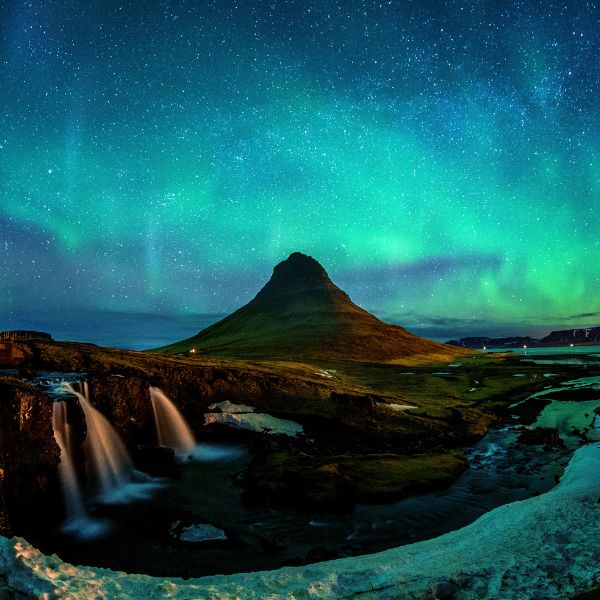
Why Iceland: Iceland offers excellent Northern Lights viewing with Kp 3 providing a chance of very fine auroras.
Best spots around Reykjavik:
- Thingvellir National Park (1 hour from city)
- Seltjarnarnes Peninsula (30 min, still accessible)
- South Coast (Vik, Jökulsárlón glacier lagoon)
Downside: Weather is unpredictable. Cloud cover can ruin otherwise perfect geomagnetic conditions Northern Lights.
Finland: Lapland Excellence
Rovaniemi (66.50°N) and Northern Lapland
- October, February and March are the best months to see Northern Lights in Lapland when sky is clearest and nights darkest
- Glass igloos for aurora viewing from bed
- Excellent winter activities (huskies, reindeer)
- Lapland Husky Adventure in March 2026, designed for aurora chasers who want an unforgettable experience
Best areas:
- Inari (north of Rovaniemi, darker)
- Saariselkä (excellent infrastructure)
- Kilpisjärvi (far north, very dark)
Sweden: Clear Skies Capital
Kiruna (67.85°N) and Abisko
- Abisko and Kiruna are already on the right latitude for the northern lights, we only need the kp-index to be 0 or 1, which are the lowest numbers
- Abisko has a unique microclimate with less cloud cover
- Aurora Sky Station (accessible by chairlift)
- Pure wilderness setting
Why Abisko is legendary: The “blue hole of Abisko”—a local weather pattern that creates clear skies even when surrounding areas are cloudy.
Alaska: North America’s Best
Fairbanks (64.84°N)
- Prime spot for Northern Lights viewing from North America
- Visitors to Fairbanks should plan to watch from a hill away from city lights with a clear view of the horizon, since the aurora can occur in any part of the sky
- Very cold (prepare for -40°F/-40°C)
- Best months: September-March
- Direct flights from Seattle
Recommended viewing sites:
- Chena Hot Springs (aurora + hot springs)
- Murphy Dome
- Cleary Summit
Russia: The Dark Horse
Murmansk
- Murmansk shines for February’s snow activities like husky sledding alongside 90% clear-sky probability
- Less touristy than Scandinavia
- Significantly cheaper
- February 2026 specifically favorable for Murmansk with 90% clear-sky probability
Note: Check visa requirements and political situation before booking Northern Lights.
Canada: Wilderness Aurora
Yellowknife, Northwest Territories (62.45°N)
- Positioned directly under the auroral oval
- Crystal-clear winter air
- Vast wilderness (minimal light pollution)
- Best months: November-March
Churchill, Manitoba
- Famous for polar bears (October-November)
- Aurora season: January-March
Understanding the Kp Index (And Why It’s Misleading)
What is the Kp Index?
The KP index (planetary K-index, or geomagnetic index) is a standardized measurement of geomagnetic activity on Earth, measuring how much Earth’s magnetic field is disturbed by solar wind and geomagnetic storms.
The index was developed in 1949 by German scientist Julius Bartels and remains the most widely used metric for measuring geomagnetic disturbances worldwide.
The Kp Scale (0-9)
For Kp in the range 0 to 2, the aurora will be far north, quite dim in intensity, and not very active.
For Kp in the range of 3 to 5, the aurora will move further from the poles, it will become brighter and there will be more auroral activity (motion and formations).
For Kp in the range 6 to 7, the aurora will move even further from the poles and will become quite bright and active, possibly visible from the northern edge of the United States Northern Lights.
For Kp in the range 8 to 9, the aurora will move even further towards the equator and it will become very bright and very active, with aurora possibly seen directly overhead from the northern states of the USA.
What Kp You Need Based on Location
Arctic regions (Northern Norway, Alaska, Iceland): KP 0-2 is enough to see auroras regularly.
Mid-latitude regions (Northern US, Central Europe, Southern UK): KP 5-6 needed for visible displays.
The Critical Kp Index Limitation
Here’s what beginners don’t understand:
The KP index relies on a 3-hour average of geomagnetic data collected from 13 observatories around the world.
Because of this, the KP index is often too slow and too generalized to capture short-lived auroral activity, such as auroral substorms.
Auroral substorms are the BEST displays:
Research from the Swedish Institute of Space Physics shows that auroral substorms, the most intense and visually stunning aurora displays, typically last only 10 to 30 minutes.
These brief but dramatic events can occur when the global KP index remains relatively low Northern Lights.
Think of it this way: Using a 3-hour average to predict a 10-minute auroral event is like using a monthly weather report to decide whether to bring an umbrella today.
What Professional Aurora Hunters Actually Use
Professional aurora photographers and dedicated aurora hunters don’t rely on slow 3-hour KP index forecasts. Instead, they use real-time aurora data that updates every few minutes.
They track:
- Local magnetometers – instruments showing magnetic activity in your exact region
- Solar wind data from satellites – especially the IMF Bz value. A negative Bz means Earth’s magnetic field is open at the north pole, increasing chances of aurora borealis
- Live cloud cover maps – to see if skies are clear for visibility
- Auroral substorms: short, powerful bursts of activity lasting 10–30 minutes that often produce the brightest northern lights displays, even during lower KP levels
The takeaway: Don’t obsess over Kp forecasts. If you’re in the right location during aurora season, it’s entirely possible to see the aurora borealis at night with a Kp of 0 when the solar activity is quiet in Abisko and Kiruna Northern Lights.
How to Actually Hunt the Northern Lights
Essential Tools and Apps
Real-Time Aurora Forecasting:
- Hello Aurora app – Use Hello Aurora app to get real-time forecast and live updates from aurora hunters in the area
- My Aurora Forecast – Convenient application that helps to follow the northern lights
- Space Weather Live – Real-time information on the occurrence of the auroras, such as the KP index
- NOAA Aurora Dashboard – Information on solar activity and predictions of the aurora
- Aurorasaurus – Social aurora reporting
Cloud Cover:
- Clear Outside app
- Windy.com
- Local weather radar
Moon Phase Tracker:
- Check moon phase calendars when planning to avoid full moons that wash out fainter displays
The Critical Factors (All Must Align)
1. Darkness
Cold and clear are best for viewing. Get away from city lights and let your eyes adjust to the darkness. The further away from those earth based light sources the better.
Light pollution is the aurora viewer’s worst enemy. Drive at least 30-45 minutes away from urban areas to find truly dark skies.
2. Clear Skies
This is your biggest ally and your biggest foe. Even if the aurora is dancing above the clouds, you won’t see it. Always check cloud forecasts diligently for cloud cover.
The weather frequently changes in Iceland, meaning a favourable northern lights forecast can quickly change if there’s cloud cover. Always check websites and Northern Lights apps right before heading out.
3. Viewing Direction
In the Northern Hemisphere, the aurora typically appears in the northern sky. Find a location with an unobstructed view of the northern horizon.
Fairbanks visitors should plan to watch from a hill away from city lights with a clear view of the horizon, since the aurora can occur in any part of the sky.
4. Geomagnetic Activity
Monitor apps, but don’t obsess. Being in the right location matters more than waiting for Kp 5.
5. Patience
The hours around local midnight are typically best. Be patient – aurora displays can be unpredictable, appearing and fading over several hours.
Photography Tips
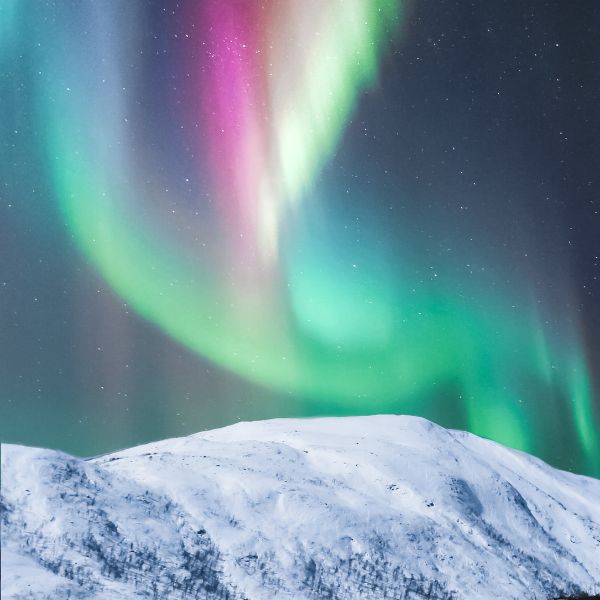
Smartphone:
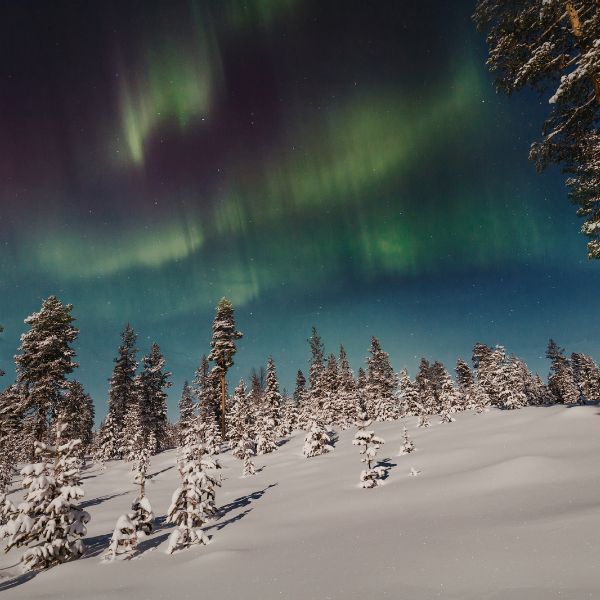
Although smartphones cannot compete with DSLR, it is possible to take a picture of the northern lights by stabilising your phone and setting the exposure time to the maximum in the night mode.
DSLR/Mirrorless:
- Wide-angle lens (14-24mm ideal)
- Sturdy tripod (essential)
- Manual mode
- ISO 1600-3200
- Aperture f/2.8 or wider
- Shutter 5-25 seconds (experiment)
- Manual focus set to infinity
- Shoot RAW for editing flexibility
Pro tip: Cameras enhance faint displays (long exposures capture O+ ions’ red hues).
What to Wear
For Arctic Winter (-20°F to -40°F / -29°C to -40°C):
- Base layers (merino wool)
- Insulated mid-layers (fleece or down)
- Waterproof, insulated parka
- Insulated snow pants
- Winter boots rated to -40°F/-40°C
- Thick wool socks (bring extras)
- Insulated gloves + hand warmers
- Balaclava or face mask
- Warm hat covering ears
- Chemical toe/hand warmers
If you are aurora hunting at cold temperatures, please be prepared! In extreme cold conditions, small problems may become disasters in remote areas.
Planning Your Northern Lights Trip
How Long to Stay
Minimum: 3 nights
Ideal: 5-7 nights
Why: If you travel to aurora regions during dark and clear conditions and stay for 3-7 days, you will most likely see the aurora.
Weather is unpredictable. Cloud cover can block aurora for nights in a row. More nights = higher probability.
Booking Timeline
6-12 months ahead:
- Book flights
- Reserve hotels/cabins in prime locations
- Book guided tours (if desired)
With solar maximum generating buzz, popular aurora destinations will fill up fast. Book accommodations and tours 6-12 months in advance for peak season (September-March).
Budget Breakdown (Per Person, 5 nights)
Budget Option (Finland/Sweden):
- Flights: $600-1,000
- Accommodation (hostel/Airbnb): $300-500
- Food: $200-300
- Activities: $100-200
- Total: $1,200-2,000
Mid-Range (Norway/Iceland):
- Flights: $700-1,200
- Accommodation (hotel/guesthouse): $600-900
- Food: $400-600
- Tours/Activities: $300-500
- Total: $2,000-3,200
Luxury (Glass Igloo in Lapland):
- Flights: $800-1,200
- Accommodation (glass igloo): $1,500-2,500
- Food: $500-700
- Premium tours: $500-800
- Total: $3,300-5,200
Tour vs. Independent
Guided Tours:
✅ Experts know best viewing spots
✅ Transportation provided
✅ No planning stress
✅ Local knowledge
❌ Expensive ($100-300 per night)
❌ Fixed schedule
❌ Shared experience
Independent:
✅ Total flexibility
✅ Cheaper
✅ Private experience
✅ Go when apps show activity
❌ Need rental car
❌ Must monitor forecasts yourself
❌ Risk of poor location choices
Recommendation: If first time and budget allows, do 1-2 guided tours to learn, then go independent the remaining nights.
Beyond the Aurora: Activities to Combine
Daytime Activities (You’ll Have Lots of Daylight Hours)
Norway:
- Whale watching (Tromsø)
- King crab safari
- Dog sledding
- Snowmobiling
- Fjord cruises
Iceland:
- Blue Lagoon
- Golden Circle tour
- Ice cave exploration
- Glacier hiking
- Snorkeling Silfra fissure
Finland:
- Husky sledding
- Reindeer farm visits
- Snowshoeing
- Cross-country skiing
- Sauna culture
Alaska:
- Chena Hot Springs
- Ice fishing
- Fat biking
- Wildlife viewing
Winter Activities at Viewing Locations
Many hotels and lodges offer:
- Glass igloos with aurora alarms
- Outdoor hot tubs for aurora soaking
- Teepees with open roofs
- Aurora wake-up calls
Common Mistakes to Avoid
Mistake #1: Only Staying 1-2 Nights
Weather is unpredictable. Cloud cover can ruin perfect geomagnetic conditions. Stay minimum 3 nights, ideally 5-7.
Mistake #2: Staying in the City
Light pollution kills aurora visibility. Get 30-45 minutes outside urban areas minimum.
Mistake #3: Only Going Out When Kp is High
Bright auroras can appear at lower KP values. Vivid, dynamic auroras often occur at Kp 2–3 when local geomagnetic conditions are favorable.
Mistake #4: Giving Up Too Early
Be patient – aurora displays can be unpredictable, appearing and fading over several hours.
Peak activity often happens between 11 PM – 2 AM. Many tourists go out at 9 PM, see nothing, and go to bed before the real show.
Mistake #5: Booking During Full Moon
Full moons hurt a bit because they increase ambient light and darkness is best for viewing.
Check moon phases when booking and avoid full moon periods.
Mistake #6: Not Dressing Warmly Enough
You’ll be standing still in -20°F to -40°F temperatures for hours. Frostbite is real. Small problems may become disasters in remote areas at cold temperatures.
Mistake #7: Relying Only on Hotels Near Cities
The best aurora viewing is in wilderness. Consider:
- Wilderness lodges
- Cabins outside towns
- Rental cars for mobility
- Locations with minimal light pollution
Frequently Asked Questions
Can I see the Northern Lights in the summer?
No. You need darkness. One caveat that people often neglect to think of is that the high latitudes where aurora occur are also latitudes where it doesn’t get dark in the summer.
Midnight sun = no aurora viewing from May-July in Arctic regions.
What if it’s cloudy?
You won’t see anything. Auroras happen in the upper atmosphere, so if there is cloud cover, you are out of luck.
This is why mobility and multiple nights matter. If one location is cloudy, drive to another.
Can I see Northern Lights from lower latitudes in 2026?
Maybe. During strong geomagnetic storms, auroras can occasionally be visible farther south, including parts of the northern United States, the U.K., and mainland Europe.
But don’t count on it. Go north for guaranteed chances.
Do I need a tour or can I go alone?
Unless you’re lucky enough to have the lights come to you, seeing auroras is a matter of being in the right place at the right time.
You can absolutely go independently with apps, a car, and preparation. But tours provide expert local knowledge.
What color will the aurora be?
Oxygen creates green and red light, while nitrogen glows blue and purple.
Most commonly you’ll see green. Statistics show February 2026 aurora frequency 20% above average, with vivid greens, purples, and reds.
Purple and red appear during stronger displays.
Your 2026 Northern Lights Action Plan
Step 1: Choose Your Dates
- Avoid full moon periods
- Target equinox months (March, September) for strongest activity
- February 2026 is exceptional right now
- Book 5-7 nights minimum
Step 2: Choose Your Location
- First timer: Iceland or Tromsø, Norway (accessible, infrastructure)
- Serious hunter: Abisko, Sweden or Fairbanks, Alaska
- Budget conscious: Finnish Lapland or Murmansk
- Wilderness seeker: Yellowknife or northern Sweden
Step 3: Book (Now)
- Popular aurora destinations will fill up fast. Book accommodations and tours 6-12 months in advance
- Flights
- Accommodation outside cities
- Optional: 1-2 guided tours
- Rental car (if going independent)
Step 4: Prepare
- Download aurora apps
- Buy/rent warm clothing
- Pack camera gear
- Research backup viewing locations
- Check visa requirements
Step 5: On Location
- Monitor apps constantly
- Drive to dark sky locations
- Face north with clear horizon
- Stay out 10 PM – 2 AM minimum
- Be patient—wait for substorms
Step 6: Don’t Miss It
Solar cycles are slow, and they do not repeat on demand. While auroras will never disappear entirely, conditions like those expected in 2026 do not come around often.
Don’t miss this once-in-a-decade opportunity. The solar maximum double peak makes 2026 one of the best years in recent memory for aurora viewing.
Final Thoughts
The northern lights are never guaranteed. That uncertainty is part of what makes them unforgettable. But some years quietly stack the deck in your favor. 2026 is shaping up to be one of those years.
You have two choices:
- Wait until the mid-2030s for the next solar maximum
- Go in 2026
The science is clear. The timing is perfect. The only question is whether you’ll take action.
Book your trip. Pack your warmest clothes. Download the apps. Get to the Arctic.
The aurora is waiting.
What location are you planning for your 2026 Northern Lights trip? Share in the comments!




One Comment