
Azores, Portugal: Europe’s Last Secret Islands
Table of Contents
Three years ago, I asked a Portuguese friend where I should go next in Portugal. She looked at me, paused, and said: “The Azores. But don’t tell anyone.”
I laughed. She didn’t.
“I’m serious,” she continued. “It’s the last place in Europe that hasn’t been ruined yet. No crowds fighting for selfies. No tour buses blocking narrow streets. Just… nature. And locals who still remember when tourism wasn’t a thing.”
She was right.
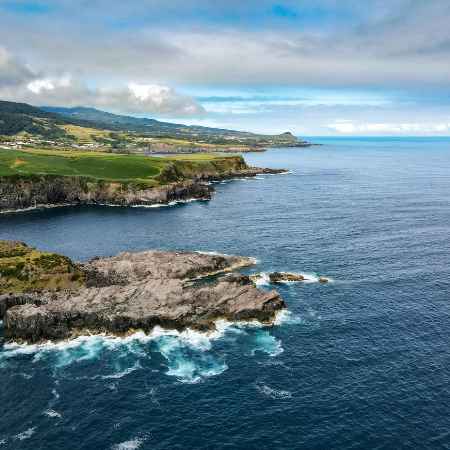
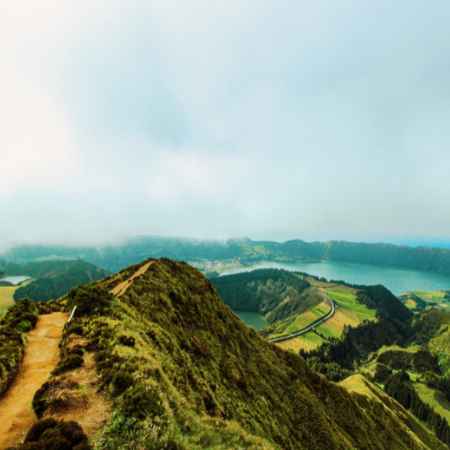
The Azores—nine volcanic islands scattered across the middle of the Atlantic Ocean, roughly 1,000 miles off Portugal’s coast—remain gloriously under the radar. While Madeira morphed into a cruise ship destination and the Algarve became a retirement community for Northern Europeans, the Azores stayed wild, stayed real, and stayed quiet.
But that’s changing. Slowly.
Which is why, if you’ve been searching for that one European destination where you can still disappear into untouched nature, eat dinner at family-run restaurants where you’re the only non-local, and spend two weeks without seeing another tour group—this is it.
This isn’t a “7 days, 5 islands” rushed itinerary. This is a guide for slow travelers who understand that the best experiences come from staying put, building routines, and letting a place reveal itself gradually.
Let’s talk about the Azores nobody’s writing about.
Why the Azores Are Different (And Why That Matters)
They’re Not Trying to Be Iceland
Every travel blogger calls the Azores “Europe’s Hawaii” or “Iceland without the ice.” Both comparisons are lazy and wrong.
The Azores are their own thing entirely.
Yes, they have volcanoes (dormant, not active). Yes, they have geothermal hot springs. Yes, they have dramatic landscapes. But they’re not performative about it. There’s no manufactured “adventure tourism” vibe. No $200 Instagram photo tours. No crowds at “secret” waterfalls that 10,000 people visit daily.
The Azores are what Iceland was 20 years ago, before the influencers discovered it.
They’re Actually Affordable
Here’s something nobody tells you: The Azores are significantly cheaper than mainland Portugal, which is already cheaper than most of Europe.
Real daily costs (slow travel style, staying 2+ weeks):
- Apartment: €40-60/night (with kitchen, often ocean views)
- Groceries: €25-35/day for two people cooking most meals
- Eating out: €8-12 for fresh fish, €15-20 for full dinner
- Beer: €1-1.50
- Activities: Most are free (hiking, swimming in natural pools, exploring)
- Car rental: €20-30/day (essential for exploring)
Total: €70-100/day per person for comfortable slow travel with a mix of cooking and eating out.
Compare that to Iceland (€200+/day) or even the Algarve (€120-150/day).
Tourism Hasn’t Ruined Them (Yet)
In Flores Island, the westernmost point of Europe, you can hike for hours without seeing another person. In São Jorge, farmers still move cows through village streets. In Graciosa, locals look genuinely surprised when tourists show up.
The Azores received about 300,000 tourists in 2019—less than Hallstatt, Austria receives in a single year. That tiny Austrian village gets 10,000 visitors per day in peak season.
For context: Iceland gets 2.3 million tourists annually. The Azores get 13% of that, spread across nine islands.
This won’t last forever. Direct flights from Boston and New York are increasing. European budget airlines are eyeing routes. The secret is leaking out.
But right now? Right now, the Azores are still yours to discover.
Which Islands for Slow Travelers? (The Honest Breakdown)
Nine islands sounds overwhelming. It is, if you’re trying to “see them all” in two weeks.
Slow travel means choosing fewer islands and actually experiencing them. Here’s the breakdown nobody gives you honestly:
São Miguel: The Gateway (But Don’t Stop Here)
Population: 140,000 (more than half the Azores’ total population)
Vibe: Most developed, most touristy (relatively speaking), most infrastructure
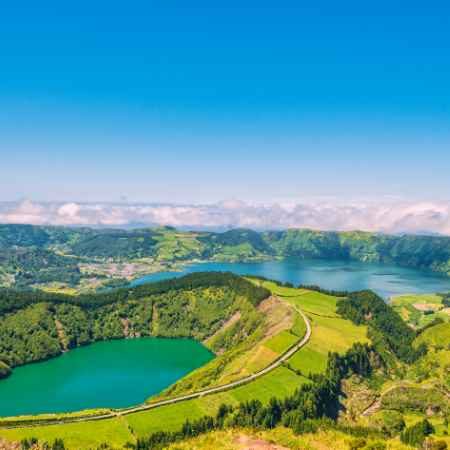
The truth: São Miguel is beautiful. Sete Cidades crater lakes are genuinely stunning. Furnas hot springs are worth experiencing. The food scene in Ponta Delgada is excellent.
But.
If you only visit São Miguel, you haven’t really experienced the Azores. You’ve experienced the Azores’ most accessible, most photographed, most tour-group-friendly version.
For slow travelers: São Miguel works as a 4-5 day introduction before heading to quieter islands. Or skip it entirely if you’re drawn to remoteness.
Hidden gems on São Miguel:
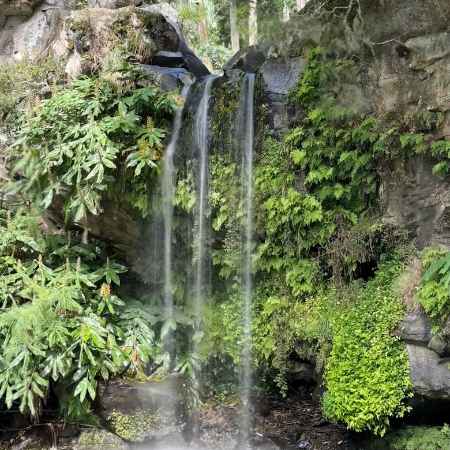
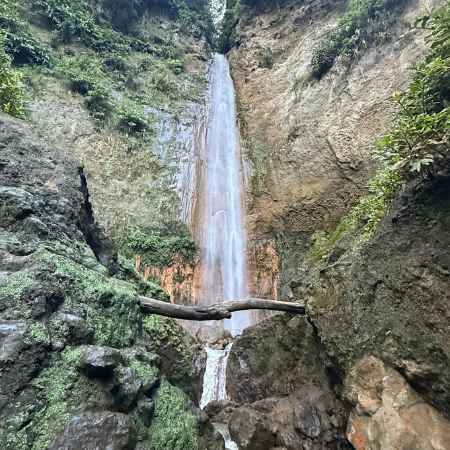
- Ribeira dos Caldeirões Natural Park (waterfalls without crowds)
- Nordeste village (eastern tip, hardly any tourists)
- Salto do Prego waterfall hike (local favorite, not in tour itineraries)
- Small fishing villages along the north coast
Flores: The One Everyone Misses (And Shouldn’t)
Population: 3,400
Vibe: Wild, remote, dramatic, “island of waterfalls”
The truth: Flores is what people imagine when they dream of undiscovered islands.
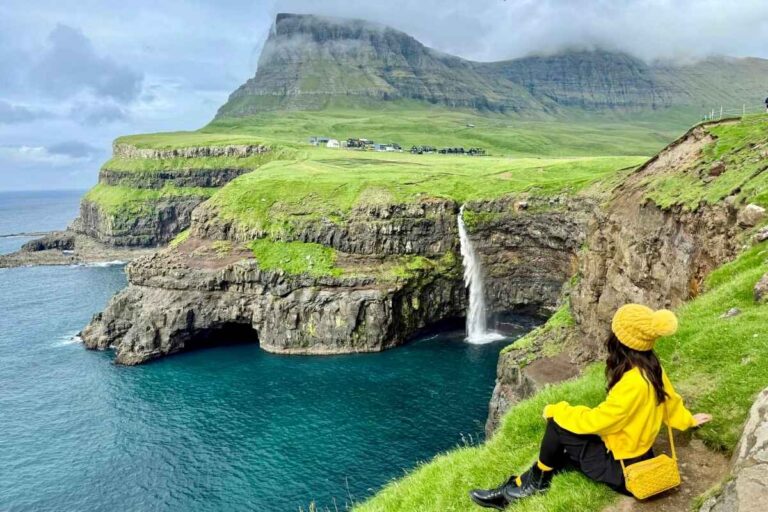
Waterfalls cascade directly into the ocean. Lakes hidden in volcanic craters reflect clouds that change by the minute. Coastal hikes lead to lookouts where you’re utterly, completely alone.
The “disadvantage”: Flores feels remote because it is remote. It’s a 2.5-hour flight from São Miguel. Weather can ground flights. There are fewer restaurants, shorter opening hours, and you need to be self-sufficient.
For slow travelers: This is paradise. Flores rewards those who stay put for a week or more. Rent a house in Fajãzinha or Santa Cruz das Flores. Hike different trails each day. Learn the rhythm of when cafés open. Discover which local family makes the best queijadas (cheese pastries).
Why locals love Flores: “It’s still the Azores from 40 years ago,” one resident told me. No pretense. No performance. Just life.
Don’t miss:
- Poço da Alagoinha (hidden waterfall requiring a hike)
- Rocha dos Bordões (perfectly geometric basalt columns)
- Fajã Grande (westernmost village in Europe, sunset magic)
- Lagoa Funda and Lagoa Rasa (paired crater lakes, rarely visited)
São Jorge: The Dramatic Island Nobody Talks About
Population: 8,400
Vibe: Elongated mountain ridge, dramatic cliffs, unique fajãs (coastal plains), cheese obsession
The truth: São Jorge is my personal favorite, and I rarely meet other travelers who’ve been there.
The island is essentially one long mountain range running 34 miles with dramatic cliffs plunging to the ocean. What makes it unique are the fajãs—flat coastal areas formed by ancient lava flows or landslides, accessible only by steep hiking trails.
These fajãs are where farming families have lived for generations, growing crops, raising cattle, and living largely disconnected from the modern world.
For slow travelers: São Jorge is hiking paradise. Not Instagram-friendly, perfectly-manicured-trail hiking. Real hiking. Challenging descents to remote fajãs. Trails through pastures where cows outnumber humans 100 to 1.
The pace is slower than even other Azores islands. Restaurants close early. Villages feel genuinely remote. There’s little tourism infrastructure, which is precisely the point.
Why it’s perfect for slow travel: You won’t be tempted to rush. There aren’t 15 “must-see” attractions. Just coastline, mountains, cheese factories, and silence.
Don’t miss:
- Fajã dos Cubres (coastal plain with lagoon, reached by steep trail)
- Fajã da Caldeira de Santo Cristo (remote surfing beach, natural lagoon)
- Queijo São Jorge (the island’s famous semi-hard cheese—visit a dairy)
- Ponta dos Rosais (abandoned lighthouse, northwestern tip, otherworldly)
Pico: The Wine Island With Portugal’s Highest Mountain
Population: 14,000
Vibe: Volcanic wine culture, mountain climbers, whale-watching epicenter
The truth: Pico’s landscape looks like nowhere else in Europe.
Ancient lava flows created a maze of stone walls protecting thousands of tiny vineyard plots from Atlantic winds. This UNESCO World Heritage landscape (the lajidos) took centuries to build and produces distinctive wine you can’t find anywhere else.
Oh, and there’s Pico Mountain—Portugal’s highest peak at 2,351 meters (7,713 feet). Climbing it is not a casual hike. It’s a legitimate mountaineering challenge requiring pre-dawn starts, scrambling over loose volcanic rock, and dealing with rapidly changing weather.
For slow travelers: Pico works well combined with Faial (20-minute ferry) and São Jorge. Spend a week here. Visit small wine cellars. Hike coastal trails instead of just climbing the mountain. Explore the volcanic caves.
The island has solid infrastructure (it’s the second-largest Azores island) but maintains an authentic, working-island character.
Don’t miss:
- Lajido wine landscape walk (UNESCO site, incredible stone wall network)
- Gruta das Torres (longest lava tube cave in the Azores, 5 km)
- Lagoa do Capitão (serene lake with Pico Mountain reflections)
- Local adegas (wine cellars) in Madalena or Criação Velha
- Pico Mountain summit (if you’re fit and weather cooperates)
Faial: The Sailor’s Island (And Day-Trip Hub)
Population: 15,000
Vibe: Maritime history, sailing culture, volcanic moonscape, hydrangeas everywhere (in season)
The truth: Faial is “the blue island” because of its hydrangea-lined roads (peak bloom: July-August). It’s also the mid-Atlantic crossroads for sailors, making Horta one of the Atlantic’s most famous harbors.
Faial is small enough to circle in an hour’s drive but rewards slower exploration. The Capelinhos volcano area (erupted 1957-1958) feels like Mars—black volcanic ash, lighthouse, total desolation.
For slow travelers: Faial works best as a base for exploring the “triangle islands” (Pico, São Jorge, Faial). Take ferries between them. Stay a week in Horta and day-trip.
The nightlife in Horta is the liveliest in the Azores (which still means low-key by normal standards).
Don’t miss:
- Capelinhos Volcano and Interpretation Centre (lunar landscape, fascinating museum)
- Caldeira do Faial (massive volcanic crater, 400 meters deep)
- Peter Café Sport (legendary sailor’s bar, walls covered in yacht club flags)
- Biscoitos natural volcanic pools (nearby Terceira, but worth a mention)
The Others (Brief Mentions)
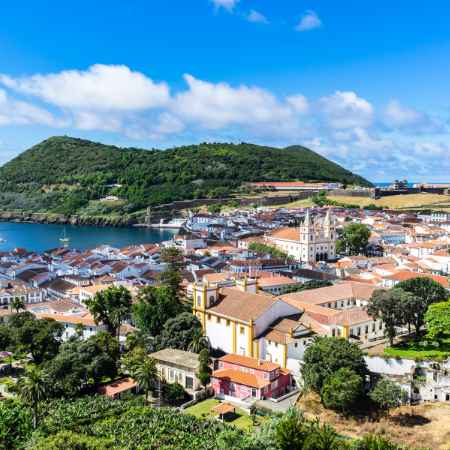
Terceira: Second-most-developed island. Historic Angra do Heroísmo (UNESCO city). Summer festivals and bullfights. Good if you want more services/nightlife but less remote feel.
Graciosa: Tiny, flat (by Azores standards), famous for Furna do Enxofre volcanic cave. Very quiet. Good for extreme slow travel.
Santa Maria: Southernmost, warmest, with actual sandy beaches. Different vibe from other islands—more Mediterranean. Least visited.
Corvo: Smallest (430 residents), only accessible from Flores. Ultimate remote experience.
The Slow Travel Approach: Stay Put, Go Deep
Why Island-Hopping is a Trap
Most Azores itineraries are optimized for “seeing everything.” They look like this:
- 3 days São Miguel
- 2 days Terceira
- 2 days Pico
- 1 day Faial
- 1 day São Jorge
This is exhausting and expensive. Inter-island flights cost €50-100 each. Ferries take hours. Weather delays happen frequently. You spend more time in airports and at docks than experiencing islands.
You also never settle in. You don’t find the bakery with the best massa sovada (sweet bread). You don’t discover the hidden trail locals use. You don’t have time for a second dinner at that family restaurant where they remembered your name.
The slow travel alternative:
Choose 1-2 islands max for 2 weeks. Three if you must, but spend at least 5-7 days per island.
Example: 2 weeks, properly slow:
Option A (Remote + Accessible):
- 10 days Flores
- 4 days São Miguel (arrival/departure buffer)
Option B (Triangle Islands):
- 6 days São Jorge (rent apartment in Velas)
- 5 days Pico (base in Madalena)
- 3 days Faial (stay in Horta)
- Ferry between them (20-40 minutes)
Option C (Deep Single-Island):
- 14 days Flores OR São Jorge
- Truly live there
- Weekly apartment rates significantly cheaper
- Time to build actual routines
What Slow Travel Actually Looks Like in the Azores
Day 1-2: Arrive, get groceries, settle into apartment, drive around to orient yourself. Don’t try to “do” things yet.
Day 3-5: Start exploring. Pick one activity per day. Hike a trail. Visit a village. Find a natural pool. Have dinner at a local spot.
Day 6-8: You’ve now identified favorite spots. Return to that incredible viewpoint at golden hour. Go back to that trail and take the longer route. Have lunch again at that family-run place where they remembered you.
Day 9-11: You know the island’s rhythm now. You know which bakery opens earliest. You know when afternoon fog rolls in. You know the best spot to watch sunset with a beer.
Day 12-14: You’re a temporary local. You wave at familiar faces. The woman at the fish market asks if you want the usual. You take a day to do absolutely nothing without guilt.
This is the slow travel difference. Not rushing through a checklist. Actually living somewhere temporarily.
The Hidden Gems Nobody Writes About
Beyond the Instagram Spots
Yes, Sete Cidades is beautiful. Yes, photograph it.
But here’s what slow travelers discover:
Tiny fajãs on São Jorge where farmers still live without road access. You hike down 400 meters of switchbacks. At the bottom: a handful of houses, small gardens, ocean crashing against black rocks. Maybe you meet someone who speaks broken English and insists you try their homemade aguardente (firewater).
Bakeries in forgotten villages where the same family has been making sweet bread for four generations. The “menu” is whatever they baked that morning. Cost: €1.50 for enough pastries for breakfast and lunch.
Natural pools nobody promotes because they’re just… pools. Not tourist attractions. Just volcanic rock formations where ocean water trapped at high tide creates calm swimming spots. No entrance fee. No facilities. Sometimes you’re alone. Sometimes local kids are jumping from rocks.
Mountain roads to nowhere that require driving 30 minutes on increasingly narrow, increasingly winding roads. At the end: a viewpoint, a abandoned structure, or just… more ocean. The journey is the point.
Villages where tourism doesn’t exist and you get genuine confusion when you ask where to eat. “There’s Maria’s house, she sometimes makes food if you ask.” That’s it. That’s the restaurant.
The Food Gems
Forget TripAdvisor. Here’s the reality:
Best meals happen at tascas (taverns/small restaurants) with no websites, no English menus, no photos of food. You point, they bring you whatever’s fresh. Fish caught this morning. Beef from cattle grazing on hills you can see from your table.
Cozido das Furnas (São Miguel only): Stew cooked underground using volcanic heat. Every restaurant does it. It’s not a “hidden gem.” But eating it at a tiny place in Furnas village instead of a tourist restaurant makes it taste different.
Lapas (limpets): Grilled with garlic and butter. Every local spot serves them. Tourists usually skip them. Don’t skip them.
Queijadas (cheese tarts): Every island has their version. Every grandmother has the “real” recipe. Try them all.
Alcatra (Terceira): Beef slow-cooked in clay pot with wine and spices. Pure comfort food.
Bolo Lêvedo (São Miguel): Sweet, fluffy breakfast bread. Get it fresh from bakeries in the morning.
Real wine costs €3-5 per bottle at local shops. It’s not amazing wine by Portuguese standards (Douro or Alentejo are better). But drinking Pico wine while looking at Pico Mountain hits different.
Practical Reality: What They Don’t Tell You
You Absolutely Need a Rental Car
Every island (except Corvo) requires a car to explore properly. Buses barely exist. Taxis are expensive and scarce.
Reality check:
- Roads are narrow, winding, often one-lane
- Drivers are usually polite but aggressive
- GPS is essential (download offline maps)
- Cows and sheep cross roads randomly
- Parking is free almost everywhere
Budget €20-30/day. Book in advance in summer (June-August).
Weather is Unpredictable and That’s Okay
The Azores sit in the middle of the Atlantic. Weather changes by the hour.
You will experience:
- Sunshine, rain, fog, and wind—often in the same day
- Microclimates—one side of an island sunny, other side foggy
- “Four seasons in one day” is not an exaggeration
- Horizontal rain (Atlantic winds, no joke)
Adaptation strategy:
- Always pack layers and rain jacket
- Don’t plan activities requiring perfect weather
- Embrace the moody, dramatic weather (it makes landscapes epic)
- Have backup indoor activities (local museums, cafés)
Best weather: July-August (warmest, most stable)
Most affordable: November-March (off-season, but expect rain and wind)
Sweet spot: May-June and September-October (good weather, fewer crowds, reasonable prices)
English Works, Portuguese Works Better
Most people in tourist-facing roles speak English. Many locals don’t.
Learning 10 Portuguese phrases will:
- Make shopping at local markets easier
- Help in small villages where English is rare
- Earn genuine smiles and warmer interactions
- Get better restaurant recommendations
Essential phrases:
- Bom dia (good morning)
- Obrigado/a (thank you – male/female)
- Quanto custa? (how much?)
- Onde fica…? (where is…?)
- Pode ajudar-me? (can you help me?)
- A conta, por favor (the check, please)
It’s Not Always Instagram-Perfect (And That’s Good)
The Azores aren’t polished. You’ll encounter:
- Crumbling buildings in villages
- Graffiti in unexpected places
- Stray dogs (friendly, fed by locals)
- Occasional litter despite natural beauty
- Aging infrastructure (some roads rough)
- Outdated facilities in budget accommodation
This is real, working islands—not a resort.
If you need everything picture-perfect, stick to Iceland or Switzerland. If you want authentic, real, slightly rough around the edges—the Azores deliver.
Sustainable Slow Travel in the Azores
The Azores’ biggest asset is that they’re not overrun. Yet.
As a slow traveler, you can help keep it that way:
Support Local, Not Chains
- Stay in local guesthouses/apartments, not international hotel chains
- Eat at family-run restaurants, not tourist-trap spots near ports
- Buy from local markets, not supermarket chains (Continente/Pingo Doce)
- Use local guides for activities, not international tour companies
Reality: There aren’t many chains anyway. It’s easy to spend locally.
Reduce Transportation Impact
- Fly into one island, fly out from same island (reduce inter-island flights)
- Use ferries when possible (Pico-Faial-São Jorge triangle)
- Stay longer in fewer places (reduce rental car usage)
- Walk in villages instead of driving between viewpoints 5 minutes apart
Respect Nature (It’s Fragile Here)
- Stay on marked trails (volcanic soil erodes easily)
- Don’t pick flowers (endemic species are protected)
- No littering (bring trash bag on hikes)
- Don’t touch or chase wildlife
- Close farm gates behind you
Azorean ecosystems are unique and vulnerable. Treat them accordingly.
Be Patient With Limits
The Azores are developing slowly. Sometimes:
- Restaurants close unexpectedly
- Shops have limited hours (closed 1-3 PM, closed Sundays)
- Tour operators cancel due to weather
- Wifi is slow
- Pharmacies don’t have every medication
- ATMs run out of cash (bring backup)
This isn’t inefficiency. This is small island reality.
If you’re frustrated by lack of 24/7 convenience, these islands aren’t for you.
Who Should (And Shouldn’t) Visit the Azores
Perfect for Azores Slow Travel If You:
✅ Value nature over nightlife
✅ Don’t need constant stimulation/activities
✅ Enjoy cooking at your accommodation
✅ Are comfortable driving narrow roads
✅ Don’t mind unpredictable weather
✅ Want to escape crowds
✅ Appreciate rougher, authentic places
✅ Can handle occasional boredom (it’s restorative!)
✅ Want genuine cultural immersion
✅ Are okay with limited English in some areas
Skip the Azores If You:
❌ Need luxury resorts and spas
❌ Want pristine sandy beaches and sunshine guarantees
❌ Prefer cities to nature
❌ Need restaurant/bar options open late
❌ Don’t want to rent a car
❌ Get frustrated by limited services/infrastructure
❌ Want “perfect” Instagram conditions
❌ Need extensive vegetarian/vegan options (limited outside São Miguel)
❌ Are uncomfortable with remoteness
Honest take: The Azores reward travelers who adapt, explore, and embrace imperfection. If you need everything controlled and polished, go somewhere else.
Your 2-Week Azores Slow Travel Plan
Option 1: The Deep Dive (Single Island)
14 days on Flores Island
Why: Flores is small enough to explore thoroughly but big enough to never feel trapped. You can hike different trails daily for two weeks.
Week 1:
- Days 1-2: Settle in Santa Cruz das Flores (main town)
- Days 3-7: Northern loop (Fajã Grande, Fajãzinha, Ponta Delgada, waterfalls)
Week 2:
- Days 8-12: Southern routes (Lajes das Flores, Fajã Grande coastal trails)
- Days 13-14: Revisit favorite spots, rest, integrate
Budget: €1,200-1,800 total (flights extra)
Option 2: The Triangle (Three Islands, Well-Paced)
14 days: São Jorge (6) + Pico (5) + Faial (3)
São Jorge (6 days):
- Base in Velas or Calheta
- Hike to fajãs (different ones each day)
- Visit cheese cooperatives
- Explore north coast villages
Pico (5 days):
- Ferry from São Jorge (40 min)
- Base in Madalena
- Wine landscape walks
- Volcanic caves
- Consider Pico Mountain climb (if weather/fitness allow)
Faial (3 days):
- Ferry from Pico (20 min)
- Base in Horta
- Caldeira do Faial
- Capelinhos volcano
- Maritime atmosphere in Horta
Budget: €1,400-2,000 total (flights extra)
Option 3: Remote + Gateway (Best of Both)
14 days: Flores (10) + São Miguel (4)
Flores (10 days):
- Full immersion in remoteness
- Multiple hiking days
- Cooking at apartment
- True slow travel
São Miguel (4 days):
- Arrival/departure buffer
- Experience largest island
- Stock up on supplies
- Different vibe to contrast
Budget: €1,300-1,900 total (flights extra)
Final Thoughts: Why This Matters
The Azores won’t stay secret forever.
Every year, more flights connect the islands to North America and Europe. More boutique hotels open. More “Best Hidden Gems in Europe!” listicles get published.
But here’s the thing: even as tourism grows, the Azores’ geography protects them. Nine islands spread across 600 kilometers of ocean can’t be “done” in a weekend. The remoteness creates a natural filter.
Fast travelers will stick to São Miguel and maybe Terceira. They’ll take their photos, tick their boxes, and leave.
Slow travelers—people who rent an apartment for two weeks, cook local fish, hike the same trail twice because once wasn’t enough, and have actual conversations with people they meet—these travelers will discover the real Azores.
The version where a farmer gives you fresh cheese because you asked about his cows. Where a waitress explains how her grandmother makes queijadas and offers to show you the family recipe. Where you watch the sunset from the same cliff three times because each sunset is different.
The Azores reward patience.
They’re not trying to impress you. They’re not performing. They’re just… there. Ancient volcanoes, old villages, working farms, endless ocean.
You can rush through, or you can stay put and let them reveal themselves slowly.
Only one of those approaches works.
Choose wisely.
Planning a slow travel trip to the Azores? Have questions about which islands to choose or how to structure your itinerary? Leave a comment below—We respond to every one.
And if this guide helped you, share it with other slow travelers looking for Europe’s last undiscovered islands.