
Slow Travel Philosophy: 4 Powerful Shifts That Transform Every Journey
Table of Contents
Slow travel philosophy starts with one uncomfortable truth.
You’ve been to places people dream about. You’ve stood in front of views that belong on postcards. You’ve ticked off cities, crossed borders, filled your camera roll.
And yet — somewhere between the flight home and unpacking your bag — something felt off.
Not the trip. The trip was fine. Beautiful, even.
But you came back the same.
That feeling isn’t travel fatigue. It isn’t burnout. It’s something much more specific — and much more fixable.
The problem was never the destination.
What Does Travel Mindset Really Mean?
Most people think a travel mindset means being adventurous. Spontaneous. Fearless about booking a one-way ticket.
That’s not it.
A travel mindset is the lens you bring to a place before you even arrive. It’s the difference between visiting a city and actually landing in it. Between taking photos of a moment and being inside one.
It’s not about where you go.
It’s about who you are when you get there.
The wrong travel mindset turns a week in Lisbon into a checklist. Twelve attractions. Eight restaurants. Four museums. You move through it all and somehow feel nothing — because you were never really there. You were executing a plan.
The right travel mindset turns three days in a village you’ve never heard of into something you carry for the rest of your life.
Same budget. Different experience. Completely different person at the end of it.
Why Most People Come Home Feeling Empty
Here’s the paradox nobody talks about.
Travel has never been more accessible. Flights are cheaper. Destinations are better documented. You can plan an entire trip in an afternoon using nothing but your phone.
And yet — travel satisfaction is dropping.
People are going more and coming back with less.
The reason isn’t the destinations. The destinations are still extraordinary. The reason is that we’ve turned travel into content. Into proof. Into something we consume rather than something we experience.
We arrive somewhere and immediately think: how does this look?
Instead of: how does this feel?
We’re physically present and mentally somewhere else — already composing the caption, already thinking about what’s next, already halfway home before we’ve had a single real conversation with the place we’re standing in.
Slow travel philosophy has a term for this: being a tourist in your own experience.
You’re there. But you’re not there.
And no amount of beautiful destinations fixes that — because the problem isn’t where you are. It’s how you’re thinking.
4 Mental Shifts That Will Change How You Travel Forever
These aren’t tips. They’re not hacks.
They’re the four shifts that separate people who collect trips from people who are actually changed by them.
Shift 1: From Escape to Arrival
Most people travel to escape something. The job. The routine. The version of themselves they’re tired of being.
There’s nothing wrong with that impulse. But escape is passive. It puts travel in the position of solving something it was never designed to solve.
Arrival is different.
Arrival means you travel toward something — a feeling, a question, a version of yourself you’re curious about. You’re not running away from your life. You’re running toward something real.
This single shift changes everything about how a trip feels. Because now you have an intention. Not an agenda — an intention. And intention creates presence.
Shift 2: From Itinerary to Intention
An itinerary tells you what to do. An intention tells you how you want to feel.
One is a schedule. The other is a compass.
When you travel with an itinerary, every deviation feels like failure. When you travel with an intention — say, I want to feel genuinely unhurried for seven days — a missed train becomes an afternoon in a café you never would have found. A closed museum becomes a conversation with a stranger that you still think about years later.
Intentional travel isn’t unplanned. It’s planned loosely enough to let something real happen.
Shift 3: From Tourist to Witness
A tourist asks: what is there to see here?
A witness asks: what is actually happening here?
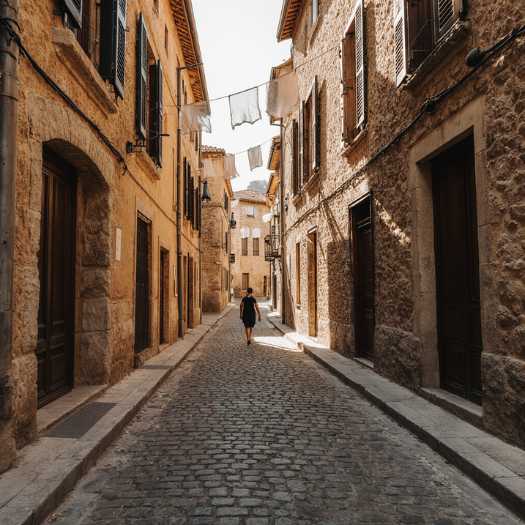
The difference is attention. Real attention — the kind that requires you to slow down enough to notice the small things. The way light hits a street at 6am. The expression on a market vendor’s face when someone buys something. The sound a city makes when it wakes up.
None of this appears on any travel guide.
All of it is what you remember twenty years later.
This is the heart of slow travel philosophy — the idea that the most extraordinary things about a place are invisible to people who are moving too fast to see them.
Shift 4: From Destination to Distance
This is the shift that defines everything Unlimit Trip is built on.
The distance was always internal.
The places you go are real. The beauty is real. But the transformation — if it happens — doesn’t come from the destination. It comes from what the destination asks of you. What it pulls out of you. What it shows you about yourself that your normal life keeps too quiet to hear.
Travel is the best mirror we have. But only if you’re willing to look.
How to Cultivate a Mindful Travel Mindset Starting Now
You don’t need to book a flight to start.
The travel mindset starts before you leave — and it’s made up of small decisions, not grand gestures.
Before you go: Set one intention. Not a bucket list. One feeling you want to take home. Write it somewhere you’ll see it. Let that be your filter for every decision during the trip.
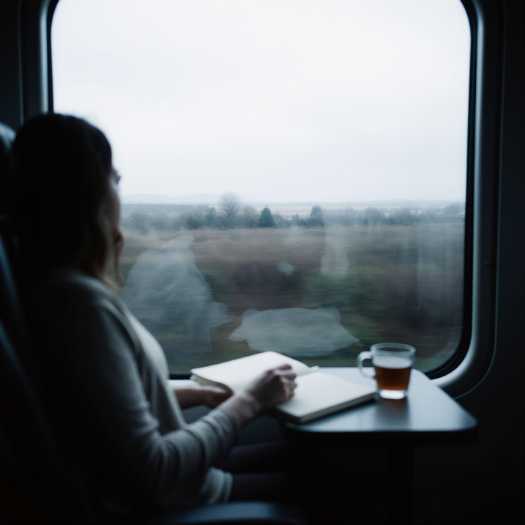
While you’re there: Give yourself one unplanned hour per day. No phone. No agenda. Just walk somewhere without knowing where you’re going. This is where the best things always happen.
When you return: Don’t immediately open your photos. Sit with the trip for a day before you start organizing, posting, processing. Let it settle. Ask yourself: what did I notice that surprised me? Not the highlights — the surprises.
These three habits don’t cost anything. They don’t require a different destination or a longer trip.
They just require a different kind of attention.
And that’s what a travel mindset really is — not a personality type you either have or don’t. It’s a practice. One you get better at every time you choose presence over performance.
The Journey Starts Before You Leave
Come back to that feeling for a moment. The one you had when you unpacked your bag and thought: something was missing.
That feeling wasn’t telling you that travel is overrated.
It was telling you that you’re capable of more from it.
The places haven’t changed. The potential hasn’t changed. What changes — what has always been the variable — is the mindset you bring to the door.
Travel isn’t escape. It never was.
It’s arrival. In the most complete sense of the word.


2 Comments