
Why Slow Travel Will Change Your Life (And How to Start)
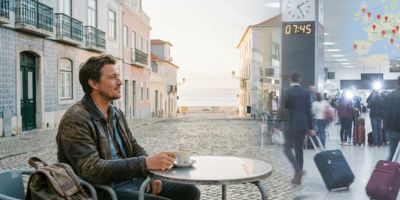
Table of Contents
I used to plan trips like a military operation. Three cities in five days. Wake up at 6 AM, hit five attractions by noon, photograph everything, collapse in a different Airbnb every other night. My camera roll was full, but my memories were empty. I thought that’s what travel was supposed to be—seeing as much as possible, checking boxes, collecting passport stamps.
Then I spent three weeks in a small coastal town in Portugal, and everything changed.
For the first time in years of traveling, I actually lived somewhere instead of just visiting. I had a favorite café. The woman at the corner bakery knew my order. I discovered a hidden beach that wasn’t on Google Maps. I came home refreshed instead of exhausted, with memories I can still recall in vivid detail years later.
That’s when I discovered slow travel—and it completely transformed how I see the world.
The Problem With How Most People Travel
Here’s the uncomfortable truth: most of us travel the wrong way.
We’re so obsessed with seeing everything that we end up experiencing nothing. We race from landmark to landmark, spend more time in airports than neighborhoods, eat every meal at tourist traps near attractions, and return home needing a vacation from our vacation.
Sound familiar?
The modern travel culture pushes us toward exhaustion. Instagram celebrates the person who “did” seven countries in two weeks. Travel blogs promise “complete guides” that pack twenty activities into three days. We’ve been conditioned to believe that more destinations equal better travel.
But here’s what nobody tells you: you can’t remember a blur.
Think about your last fast-paced trip. Can you recall specific moments? The taste of a particular meal? A genuine conversation with a local? Or does it all blend together into a hazy montage of hotel rooms, rushed museum visits, and Instagram photos you barely remember taking?
There’s a better way to travel. It’s called slow travel, and once you try it, you’ll never want to go back.
What is Slow Travel? A Complete Definition
Slow travel is the practice of staying longer in fewer places, prioritizing depth of experience over breadth of destinations. Instead of cramming five cities into one week, slow travelers might spend that entire week in a single town or region.
But slow travel is more than just extended stays—it’s a complete mindset shift about what travel should be.
What Slow Travel IS:
Intentional pacing. You choose to move through the world deliberately rather than frantically. You plan your days around experiences, not checkboxes.
Living, not sightseeing. You rent an apartment instead of staying in hotels. You shop at local markets, cook some of your own meals, and develop daily routines in new places.
Deep exploration. You get to know neighborhoods intimately. You return to the same café multiple times. You discover the spots where locals actually spend time.
Quality over quantity. You’d rather truly understand one place than superficially visit ten places.
Creating temporary homes. Each destination becomes a place you live for a while, not just a place you see.
What Slow Travel is NOT:
It’s not about being lazy. Slow travel can be just as active and adventurous as fast travel—you’re just not rushing between destinations every two days.
It’s not about having unlimited time or money. You don’t need six months or a massive budget. Even ten days in one place qualifies as slow travel. It’s about mindset, not duration.
It’s not anti-planning. Slow travelers often research extensively—they just plan for depth rather than breadth.
It’s not avoiding famous destinations. You can absolutely slow travel in Paris or Rome. The difference is staying three weeks instead of three days.
Slow Travel in Practice:
Instead of: “10 days, 5 countries, 8 cities”
Slow travel: “10 days, 1 country, 2 small towns”
Instead of: Seeing every museum in three hours
Slow travel: Visiting one museum slowly, returning if you want to see more
Instead of: Different hotel every two nights
Slow travel: One apartment for two weeks
Instead of: Eating every meal at restaurants near tourist attractions
Slow travel: Shopping at farmers markets, cooking at your apartment, finding neighborhood cafés
The difference is profound. And once you experience it, the benefits become undeniable.
Why Slow Travel is Better: The Life-Changing Benefits
1. You Actually Remember Your Trips
Fast travel creates a blur of experiences that fade within weeks. Slow travel creates specific, vivid memories that last for years.
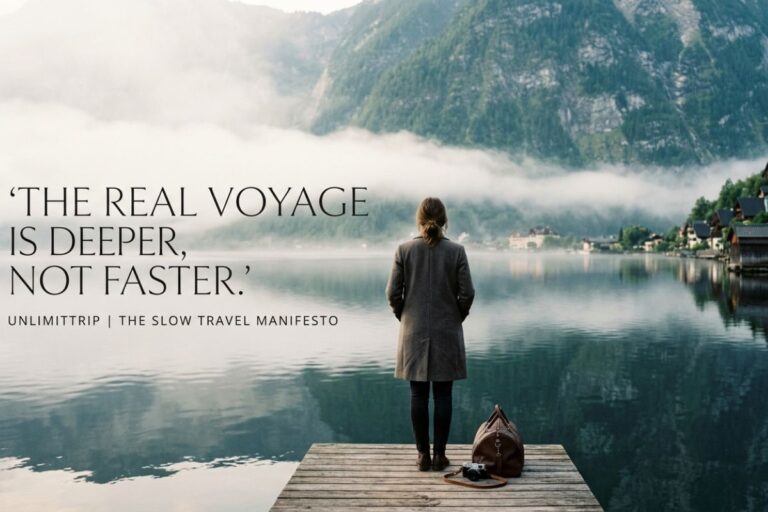
I can tell you the name of the baker in Annecy, France who made my morning croissant for three weeks straight. I remember the exact spot where I watched the sunset over Lake Hallstatt for ten consecutive evenings. I can recall the playlist the bartender played every Thursday at my neighborhood café in Lisbon.
But that whirlwind ten-day tour through five European capitals? I honestly can’t remember a single meal or a single genuine moment. Just a collection of photos that could belong to anyone.
Why this happens: Memory formation requires time and repetition. When you return to the same café three times, your brain encodes it as significant. When you rush through twenty cafés in two weeks, nothing stands out.
Slow travel gives your brain time to create real memories instead of just recording snapshots.
2. You Save Significant Money
This surprises most people, but slow travel is almost always cheaper than fast travel.
Here’s a real cost comparison:
Fast Travel Example: 10 Days, 5 Cities
- Hotels: $1,200 (5 cities × $120/night × 2 nights each)
- Trains/flights between cities: $400
- Eating out every meal: $600 (you have no kitchen)
- Entrance fees and tours: $300
- Total: $2,500
Slow Travel Example: 10 Days, 1 City
- Apartment rental: $700 (weekly rate discount)
- No inter-city transport: $0
- Groceries + occasional meals out: $350
- Free neighborhood exploration: $0
- Selective paid attractions: $100
- Total: $1,150
Savings: $1,350 (54% cheaper!)
The math works because:
Accommodation is cheaper. Weekly and monthly rates are 30-50% less than nightly rates. A $100/night hotel becomes a $50/night apartment when you book for two weeks.
You eliminate constant transportation. No flights or trains every 2-3 days. No airport taxis. No train station confusion and extra costs.
You can cook. Having a kitchen means you can shop at local markets and cook some meals. Even cooking just breakfast and occasional dinners saves $20-30 daily.
You stop paying for convenience. Fast travelers eat near attractions (expensive). Slow travelers eat where locals eat (affordable).
You need fewer paid activities. Walking your neighborhood, discovering local parks, people-watching at cafés, attending free community events—these become your activities.
I’ve traveled extensively both ways, and my slow travel trips consistently cost 40-60% less than equivalent-length fast-paced trips. The savings are real and substantial.
3. It’s Dramatically Less Stressful
Fast travel is exhausting. Packing and unpacking every two days. Constant travel anxiety about catching trains. Fear of missing flights. Rushing through museums. FOMO about attractions you didn’t have time to see.
Slow travel eliminates almost all of this stress:
No constant packing. You unpack once and actually live out of a closet instead of a suitcase.
No transportation panic. You’re not catching trains every other day or navigating unfamiliar airports in a foreign language.
No FOMO. When you’re spending two weeks somewhere, you can have a lazy day without guilt. Slept in? No problem. Spent the afternoon reading at a café? Perfect. That’s actually the point.
You can be spontaneous. When you’re not racing through a rigid schedule, you can follow unexpected opportunities. Met interesting people who invited you to a local festival tomorrow? You can go.
You don’t need vacation from your vacation. This is the biggest difference. Fast travelers often return home completely drained. Slow travelers return refreshed and energized.
Travel should restore you, not deplete you. Slow travel makes that possible.
4. You Actually Connect With Places (And Real People)
This is where slow travel becomes transformative.
After a week in one neighborhood, something magical happens. The barista recognizes you. The woman at the fruit stand starts giving you recommendations. You become a familiar face instead of just another tourist.
Real connections emerge:
In Porto, I returned to the same family-owned restaurant five times over two weeks. By the third visit, the owner was recommending dishes off-menu. By the fifth, she was showing me photos of her grandchildren and insisting I try her mother’s recipe for bacalhau.
Would that have happened on a two-day Porto stopover? Never.
You discover hidden places tourists never find:
When you have time, you explore beyond the guidebook. You follow interesting side streets. You notice a trail locals use. You find the neighborhood park where families gather on Sunday afternoons.
These discoveries don’t happen when you’re rushing from the Eiffel Tower to Notre-Dame with two hours to spare.
You feel like a temporary local:
There’s a subtle shift that happens around day 10-12 in a place. You stop feeling like a tourist. You know which bus to take. You have favorite spots. You greet people you recognize. You understand the rhythm of the neighborhood.
That feeling—of temporarily belonging somewhere—is what makes slow travel so addictive.
5. You Return Home Refreshed Instead of Exhausted
Traditional vacations often leave you depleted. You return to work needing rest, joking about how you “need a vacation from your vacation.”
Slow travel is different.
Because you’re not in constant motion, you actually rest while traveling. You have mornings where you leisurely drink coffee and read. You have evenings where you cook dinner at home and watch the sunset. You have days where you simply exist in a beautiful place without an agenda.
This restorative quality changes everything:
- You return home with energy, not exhaustion
- You feel mentally refreshed instead of overstimulated
- You’re excited about your regular life because you feel reset
- The positive effects last for weeks or months instead of fading immediately
One client told me: “After fast trips to Europe, I felt exhausted for two weeks. After three weeks of slow travel in Greece, I felt more energized than I had in five years.”
That’s the power of slowing down.
6. It’s Better for the Environment
An often-overlooked benefit: slow travel has a dramatically smaller carbon footprint.
- Fewer flights (the biggest travel carbon source)
- Less frequent train and car travel
- More walking and biking
- Supporting local businesses longer creates more sustainable economic impact
If you care about sustainable travel, slow travel is one of the most impactful changes you can make.
7. You Learn More (Including Language)
Spending three weeks somewhere gives you time to pick up language basics naturally. You learn essential phrases through daily use. You understand cultural nuances through observation.
You can’t get this from a three-day visit.
I learned more functional Portuguese in three weeks of slow travel through Portugal than I did in six months of app-based lessons. Daily interactions, repeated patterns, contextual learning—it all adds up.
How to Start Slow Traveling: Your Step-by-Step Guide
Ready to try slow travel? Here’s exactly how to make it happen, even if you’ve never done it before.
Step 1: Choose ONE Specific Destination
Not a country—a specific town or small region.
This is where most people get it wrong. “I want to slow travel through France” is too broad. “I want to spend three weeks in Annecy” is perfect.
How to choose your first slow travel destination:
Look for places that are:
- Small to medium-sized (under 200,000 population is ideal)
- Walkable or easy to navigate
- Affordable for your budget
- Appealing to your interests (food, nature, history, art, etc.)
Great slow travel destinations for beginners:
- Portugal: Lagos, Cascais, Porto, Coimbra
- Spain: San Sebastian, Granada, Valencia, Seville
- Italy: Lecce, Bologna, Lucca, Orvieto
- France: Annecy, Colmar, Aix-en-Provence, Arles
- Greece: Nafplio, Chania (Crete), Naxos, Paros
- Mexico: San Miguel de Allende, Oaxaca, Merida, Guanajuato
- Thailand: Chiang Mai, Pai, Koh Lanta
- Croatia: Rovinj, Hvar, Split
- Slovenia: Ljubljana, Lake Bled area
Avoid (for your first slow travel experience):
- Massive cities (London, Paris, Tokyo) – save these for when you’re experienced
- Ultra-touristy hotspots during peak season
- Places without good infrastructure for medium-term stays
Pro tip: Choose somewhere that intrigues you personally, not just what’s Instagram-popular. Slow travel works best when you’re genuinely curious about a place.
Step 2: Stay for 2-4 Weeks Minimum
The slow travel sweet spot is 10-21 days in one place.
Here’s why this timeline matters:
Days 1-3: You’re still a tourist. Everything feels new and foreign. You’re figuring out basics.
Days 4-7: You start developing patterns. You find your favorite café. You know which street leads where.
Days 8-14: The magic happens. You feel like a temporary resident. The neighborhood becomes familiar. You stop checking Google Maps constantly.
Days 15+: You’ve truly settled in. You have routines, favorite spots, and often genuine friendships forming.
If you can’t do two weeks: Even 7-10 days in one place is slow travel. The key is staying put, not the exact number of days.
If you have more time: Perfect! Three weeks to a month allows even deeper connection.
Step 3: Rent an Apartment, Not Hotels
This single change transforms everything.
Why apartments are essential for slow travel:
You can cook. Having a kitchen means:
- Shopping at local markets (a highlight of slow travel)
- Saving money
- Eating healthier
- Feeling at home
You can do laundry. No more paying $20 for hotel laundry or packing three weeks of clothes.
You have space to actually live. A living room, a kitchen table, maybe even a balcony. You’re not trapped in a single hotel room.
You save money. Weekly/monthly rates on apartments are 30-50% cheaper than hotels.
Where to find slow travel accommodation:
- Airbnb: Use the “monthly discount” filter
- VRBO/Vrbo: Good for longer stays
- Booking.com: Many apartments offer weekly rates
- Local Facebook groups: Expat and digital nomad groups often share apartments
- Furnished Finder: Great for 30+ day rentals
What to look for:
- Full kitchen (essential)
- Washer (highly recommended)
- Central location (walkable to shops/cafés)
- Good wifi (if you need to work)
- Natural light and comfortable living space
Budget guideline: Expect to spend slightly more per night than a budget hotel but get 3-4x more space and amenities. The weekly/monthly discount makes it worthwhile.
Step 4: Build a Loose Daily Routine
This is the secret sauce of slow travel.
Create gentle structure without rigidity:
Morning routine example:
- 8:00 AM: Wake up naturally (no alarms)
- 8:30 AM: Coffee at your favorite local café
- 9:30 AM: Walk through the neighborhood or local market
- 11:00 AM: Explore something new OR work if you’re remote
Afternoon pattern:
- Light lunch at home or at a neighborhood spot
- Siesta or reading time
- Afternoon activity (museum, hike, beach, exploring new area)
Evening rhythm:
- Cook dinner at your apartment a few nights per week
- Eat out at local restaurants (not touristy ones) other nights
- Evening walks
- Early bedtime
Weekly patterns matter too:
- Tuesday: Farmers market day
- Thursday: Your favorite restaurant
- Saturday: Day trip to nearby town
- Sunday: Lazy day with no agenda
Why routines enhance slow travel:
Routines make you feel like a resident, not a tourist. They create the familiar touchstones that form memories. They reduce decision fatigue and stress.
But keep it loose. If you wake up and want to do something completely different, do it. Routines should support your experience, not restrict it.
Step 5: Do LESS (This is the Hardest Part)
The biggest challenge new slow travelers face: resisting the urge to see everything.
You must accept:
You don’t need to visit every attraction. If there are ten museums, maybe visit two that truly interest you. Skip the rest without guilt.
“Nothing” days are perfect. Spending an entire afternoon reading at a café? That’s slow travel working exactly as intended.
Spontaneous wandering beats planned itineraries. Some of your best experiences will come from aimlessly walking and following your curiosity.
Returning to places is encouraged. Went to an amazing viewpoint? Go back. Found a perfect beach? Return three times. This repetition is what creates memories.
The point isn’t sightseeing—it’s living. You’re not trying to “do” a place. You’re trying to experience what it feels like to live there temporarily.
Practical tip: Give yourself permission to have 2-3 completely unplanned days per week. These often become your favorite days.
Step 6: Shop and Eat Like a Local
This step transforms slow travel from good to extraordinary.
Shopping at local markets:
- Go to the weekly farmers market (every town has one)
- Buy fresh produce, bread, cheese, local specialties
- Chat with vendors (even basic attempts at their language)
- Cook simple meals at your apartment
Eating like a resident:
- Avoid restaurants near major tourist attractions (rule of thumb: if you see a photo menu, leave)
- Ask locals where they eat
- Go to restaurants where you don’t see other tourists
- Eat lunch at local spots (cheaper than dinner, same food)
Finding your regular spots:
- Pick a café and go there repeatedly
- Find a bakery for morning pastries
- Discover a neighborhood bar for evening wine
- When staff start recognizing you, you’re doing it right
This habit saves money, creates authentic experiences, and helps you feel like you belong.
Step 7: Explore Beyond the Tourist Center
Every town has a tourist center where all the famous stuff is. That’s fine—see it if it interests you.
But the real magic of slow travel happens in ordinary neighborhoods.
How to find authentic areas:
- Walk 15-20 minutes from the tourist center in any direction
- Follow where locals shop and eat
- Explore residential areas
- Find where people exercise (parks, running paths, beaches)
- Visit neighborhoods with grocery stores, hardware stores, etc.
These “boring” areas often provide:
- Better food at lower prices
- Genuine local interactions
- Peaceful streets perfect for wandering
- Real insight into how people actually live
Some of my most treasured slow travel memories come from completely ordinary neighborhoods that weren’t in any guidebook.
Common Objections to Slow Travel (Answered Honestly)
“I don’t have that much time off work”
You don’t need months. While long-term slow travel is amazing, even 10 days in one place qualifies as slow travel.
Instead of trying to hit three countries in two weeks, pick one special town and stay the whole time. The benefits still apply.
Weekend slow travel is possible too: Spending a full weekend in one small town, renting an apartment, shopping at a market—that’s the slow travel mindset applied to a short trip.
It’s not about duration. It’s about approach.
“I can’t afford it”
Slow travel is usually CHEAPER than traditional travel. Reread the cost comparison in section 3.
The perception that slow travel is expensive comes from assuming you need unlimited time. But time and money are different variables.
Real budget breakdown (14 days in Portugal):
- Apartment in Porto: $850 (with weekly discount)
- Groceries and meals: $450
- Local transport: $60
- Activities and entrance fees: $150
- Total: $1,510 ($108/day)
Equivalent fast travel (14 days, 4 cities):
- Hotels: $1,680
- Meals out: $840
- Inter-city transport: $300
- Activities: $280
- Total: $3,100 ($221/day)
Slow travel costs half as much for a better experience.
“What if I get bored?”
You won’t. This fear is universal among first-time slow travelers, and it’s almost never an issue.
Here’s why:
There’s always more to discover. Even small towns have layers. After two weeks in Annecy (population 50,000), I was still finding new trails, new cafés, new neighborhoods.
Boredom forces deeper engagement. When you can’t constantly chase new destinations, you’re pushed to engage more deeply with where you are. This is actually valuable.
You can always take day trips. Slow travel doesn’t mean staying in one place every single day. Take day trips to nearby areas. The difference is you return “home” each night.
Variety exists within routine. Different cafés, different hiking trails, different restaurants, different neighborhoods—even staying in one base offers endless variety.
The “boredom” is actually restoration. What feels like boredom is often your nervous system finally relaxing. Embrace it.
“But I want to see multiple places”
You can—just do it slower.
Instead of seven countries in three weeks, pick two or three places and actually experience them.
Example slow travel itinerary (3 weeks):
Week 1: Porto, Portugal
Week 2: Lisbon, Portugal
Week 3: Lagos, Portugal (Algarve coast)
You’ve “seen” multiple places. But you’ve actually experienced them rather than just photographing them.
Quality always beats quantity in travel.
What would you rather have:
- Hazy memories of rushing through ten cities?
- Or vivid, specific memories from three places you truly came to know?
The answer becomes obvious once you try slow travel.
“Won’t people think I’m wasting my trip?”
Who cares what people think?
This is your experience, not content for social media. Travel isn’t a competition.
Some people won’t understand slow travel. They’ll ask “But you were there THREE WEEKS and only saw one town?!” with disbelief.
Let them think what they want. You’ll know the truth: you had a profound, restorative, memorable experience while they rushed through an exhausting checklist.
The people who get it will be jealous. The people who don’t get it probably haven’t discovered slow travel yet.
Real Example: 3 Weeks of Slow Travel in Portugal
Let me show you what slow travel actually looks like in practice.
Week 1: Porto (Northern Portugal)
Accommodation:
Small apartment in Ribeira district (the old town along the river). $500 for the week with kitchen and washing machine.
Daily rhythm:
- Morning coffee and pastel de nata at Confeitaria do Bolhão
- Walks along the Douro River
- Afternoons exploring different neighborhoods (Foz, Cedofeita, Boavista)
- Evening port wine at a local bar (not the tourist ones)
Highlights:
- Took a day trip to the Douro Valley (once, on day 5)
- Found a hidden park locals use
- Became friends with the woman at the corner grocery store
- Discovered the best francesinha in Porto (at a place with no tourists)
What I didn’t do:
- Didn’t visit every museum
- Didn’t go to all the “must-see” attractions
- Didn’t stress about seeing everything
- Had two completely unplanned “lazy” days
Week 2: Lisbon
Accommodation:
Apartment in Alfama neighborhood. $600 for the week.
Daily rhythm:
- Morning runs up to São Jorge Castle
- Breakfast at home (buying fresh bread daily)
- Midday exploration or beach trips to Cascais
- Late afternoon fado music at small local bars
- Cooking dinner at home 4-5 nights
Highlights:
- Day trip to Sintra (stayed for a full day, not rushed)
- Weekly market at Campo de Ourique
- Regular evening spot watching sunset at Miradouro da Senhora do Monte
- Took a Portuguese cooking class
Money saved:
Cooking 10+ meals at the apartment saved approximately $250 compared to eating out every meal.
Week 3: Lagos (Algarve Coast)
Accommodation:
Small studio near Praia Dona Ana beach. $450 for the week.
Daily rhythm:
- Morning beach sessions
- Afternoon exploring coastal trails
- Reading at beach cafés
- Fresh seafood dinners at local spots
- Completely slowed pace compared to even the previous weeks
Highlights:
- Kayaked to Benagil Cave (no tour, rented kayak independently)
- Found secret beaches only locals know
- Watched World Cup matches at a neighborhood bar with regulars
- Did absolutely nothing several afternoons (and it was perfect)
Total Trip Cost (3 weeks):
- Accommodation: $1,550
- Food (groceries + eating out): $750
- Transportation (trains between cities + local): $180
- Activities and entertainment: $220
- Total: $2,700 for 21 days ($129/day)
What Made This Trip Memorable:
It’s been three years, and I remember specific details:
- The baker in Porto who always gave me extra pastries
- The elderly man in Lisbon who taught me to properly eat sardines
- The sunset I watched from the cliffs in Lagos while reading
- The neighborhood kids playing football outside my Alfama apartment every evening
These aren’t Instagram moments. They’re real memories formed through time and repetition.
Could I have “seen” more of Portugal in three weeks? Sure. I could have hit eight cities instead of three.
Would I remember any of it? Probably not.
Would I have felt restored and connected? Definitely not.
That’s the slow travel difference.
Your Slow Travel Starter Checklist
Ready to plan your first slow travel experience? Use this checklist:
Planning Phase:
- ☐ Choose ONE specific destination (town or small region)
- ☐ Commit to minimum 10-14 days
- ☐ Research neighborhoods (not just attractions)
- ☐ Look for apartment rentals with weekly discounts
- ☐ Check for local markets and neighborhood cafés
Booking Phase:
- ☐ Book apartment with full kitchen
- ☐ Ensure place has washing machine
- ☐ Choose walkable/central location
- ☐ Book transportation to destination (but not between multiple cities)
- ☐ Don’t over-book activities or tours
Packing:
- ☐ Pack LIGHT (you’re staying put, not hotel-hopping)
- ☐ Bring comfortable walking shoes
- ☐ Include a book or e-reader
- ☐ Don’t over-pack clothes (you have laundry access)
During Your Trip:
- ☐ Unpack completely on day one
- ☐ Find your coffee spot within first 2 days
- ☐ Locate nearest grocery store and market
- ☐ Create a loose morning routine
- ☐ Give yourself permission to have “nothing” days
- ☐ Explore residential neighborhoods, not just tourist areas
- ☐ Return to places you like (don’t constantly seek new)
- ☐ Talk to locals (even just basic greetings)
- ☐ Cook at least some meals at your apartment
- ☐ Walk extensively (best way to know a place)
Mental Reminders:
- ☐ Remember: You don’t have to see everything
- ☐ Boredom is okay (it’s actually restoration)
- ☐ This isn’t about checking boxes
- ☐ Quality beats quantity
- ☐ The goal is to live somewhere temporarily, not tour it
Best Destinations for Your First Slow Travel Experience
Not sure where to start? Here are the best beginner-friendly slow travel destinations:
Europe:
Portugal (Top choice for beginners)
- Lagos, Cascais, Porto, Coimbra, Tavira
- Why: Affordable, safe, walkable, great food, English widely spoken
Spain
- Granada, San Sebastian, Valencia, Seville, Girona
- Why: Perfect weather, incredible food scene, affordable
Italy (Southern)
- Lecce, Orvieto, Bologna, Lucca, Matera
- Why: Less touristy than north, authentic, great food
Greece
- Nafplio, Naxos, Paros, Chania (Crete)
- Why: Beautiful, affordable, warm, excellent for first-timers
Slovenia
- Ljubljana, Lake Bled area
- Why: Safe, compact, stunning nature, underrated
Latin America:
Mexico
- Oaxaca, San Miguel de Allende, Mérida, Guanajuato
- Why: Rich culture, incredible food, very affordable, warm people
Colombia
- Medellín, Cartagena
- Why: Digital nomad-friendly, affordable, amazing food
Asia:
Thailand
- Chiang Mai, Pai, Koh Lanta
- Why: Super affordable, well-developed for travelers, great food
Vietnam
- Hoi An, Da Lat
- Why: Affordable, safe, incredible food culture
Japan (for experienced travelers)
- Takayama, Kanazawa, Kyoto neighborhoods
- Why: Incredibly safe, rich culture (but expensive)
What Makes These Places Great for Slow Travel:
✓ Small to medium-sized (not overwhelming)
✓ Walkable and easy to navigate
✓ Good infrastructure for medium-term stays
✓ Affordable accommodation and food
✓ Safe for solo travelers
✓ Interesting enough to stay engaged for weeks
✓ Good mix of culture, nature, and daily life
Start with places that are naturally slow-paced. Beach towns, mountain villages, and small historical cities work better than massive metropolises for your first experience.
How Slow Travel Changes You (The Deeper Benefits)
Beyond the practical benefits, slow travel changes something fundamental about how you move through the world.
You Become More Present
Fast travel keeps you in constant planning mode. What’s next? Where do we need to be? What time is the train?
Slow travel lets you actually be where you are. When you have weeks instead of days, you can sit at a café without checking your watch. You can follow an interesting street without worrying about your schedule.
This presence—this ability to just be somewhere—is a skill that transfers to regular life.
You Develop Patience
Slow travel teaches patience. Not everything needs to be experienced immediately. Not every question needs an instant answer. Getting lost becomes an adventure instead of a crisis.
This patience becomes a life skill.
You Learn What You Actually Enjoy
When you’re not rushing, you discover what you genuinely like versus what you think you should like.
Maybe you realize you don’t actually enjoy museums that much, but you love hiking. Maybe you discover you’d rather spend hours at a market than visit famous monuments.
Slow travel gives you space to understand yourself better.
You Become Comfortable with Uncertainty
Without the rigid structure of fast travel, you learn to be okay with not knowing exactly what will happen. This comfort with uncertainty is one of life’s most valuable skills.
You Realize “Doing Nothing” Has Value
Our culture glorifies constant productivity and experiences. Slow travel teaches you that sitting in a park watching people, reading at a café for hours, or taking an aimless walk has profound value.
This might be slow travel’s greatest gift.
Final Thoughts: Why You Should Try Slow Travel
Travel doesn’t have to be exhausting. You don’t have to see everything. The best moments happen when you slow down.
Slow travel isn’t about where you go—it’s about how you go.
It’s about choosing depth over breadth, memories over checklists, and experiences over Instagram posts.
It’s about remembering that travel should restore you, not deplete you.
It’s about discovering that the world isn’t a collection of attractions to photograph—it’s a series of places where real people live real lives, and for a brief time, you get to join them.
You don’t need six months or unlimited money. You just need to pick one place and stay there long enough to actually experience it.
Try it once. Pick one place. Stay two weeks. See how it feels.
I promise you’ll come home with better memories, more money in your account, and a completely different understanding of what travel can be.
Your next trip doesn’t have to be a race.
The world isn’t going anywhere. Slow down and actually see it.
Start Your Slow Travel Journey
Ready to begin? Here’s your action plan:
- This week: Choose your destination
- Next week: Book your apartment (2+ weeks)
- Before you leave: Remind yourself this isn’t about seeing everything
- While there: Give yourself permission to slow down
- After: Share your experience and inspire others to slow travel
The slow travel community is waiting for you. Once you try it, you’ll never want to travel any other way.
What destination are you considering for your first slow travel experience? What questions do you have about getting started? Share in the comments below—I read and respond to every one.
One Comment